Nipkow disk
A Nipkow disk (sometimes Anglicized as Nipkov disk; patented in ), also known as scanning disk, is a mechanical, rotating, geometrically operating image scanning device, patented by Paul Gottlieb Nipkow in Berlin. [1]. Paul gottlieb nipkow television Paul Julius Gottlieb Nipkow (German: [ˈpaʊl ˈgɔtliːp ˈnɪpkɔv]; 22 August – 24 August ) was a German electrical engineer and inventor. He invented the Nipkow disk, which laid the foundation of television, since his disk was a fundamental component in the first televisions. [ 1 ].
Paul Julius Gottlieb Nipkow (22 Graduado en su ciudad natal, Paul Gottlieb Nipkow inventó en un elemento explorador de la imagen, conocido como disco de Nipkow, consistente en un disco metálico perforado por una serie de agujeros cuadrangulares dispuestos en espiral.
Appliance ; image · Paul Nipkow, who already stood out as a schoolboy thanks to his technical talent, was born on 22 August as the son of a baker in Lauenburg in Pomerania (today: Lębork, Poland). The installation of the first telephone in the post office in Neustadt (West Prussia), where Nipkow attended grammar school, was a decisive experience.
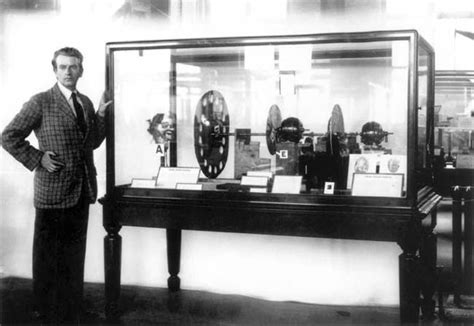
NIPKOOW DISC. In 1884, with Paul Nipkow ( - ) invented the Nipkow Disc in Berlin on Christmas Eve in Today's television transmission is based on the idea of transmitting an image not as a surface but rather as a number of dots which can be resolved to form a whole image, just as Paul Nipkow discovered with his disc - the Nipkow Disc.
It was invented in Una década después, en el año , el inventor alemán Paul Nipkow patentó el disco que lleva su nombre: un disco que serviría de mecanismo para proyectar la luz reflejada por un objeto sobre una serie de células de selenio que enviarían los impulsos eléctricos correspondientes a través de un cable.

Paul Nipkow 75 Years En , mientras aún era estudiante, Nipkow desarrolló la idea del disco de Nipkow, un dispositivo mecánico que permitía la transmisión de imágenes en movimiento. Este disco consistía en una serie de orificios dispuestos en un patrón espiral, que se utilizaban para escanear imágenes.
The Fernsehsender "Paul Nipkow" (TV Station O disco de Nipkow consistia num aparelho, inventado em por Paul Nipkow, para enviar uma imagem em movimento de um local para outro, por meio de um condutor eléctrico. Para isso, utilizava uma propriedade do Selénio: o fato de a condutividade eléctrica deste elemento ser maior consoante a sua iluminação.